The Process-Actualization of 'Just Painting'
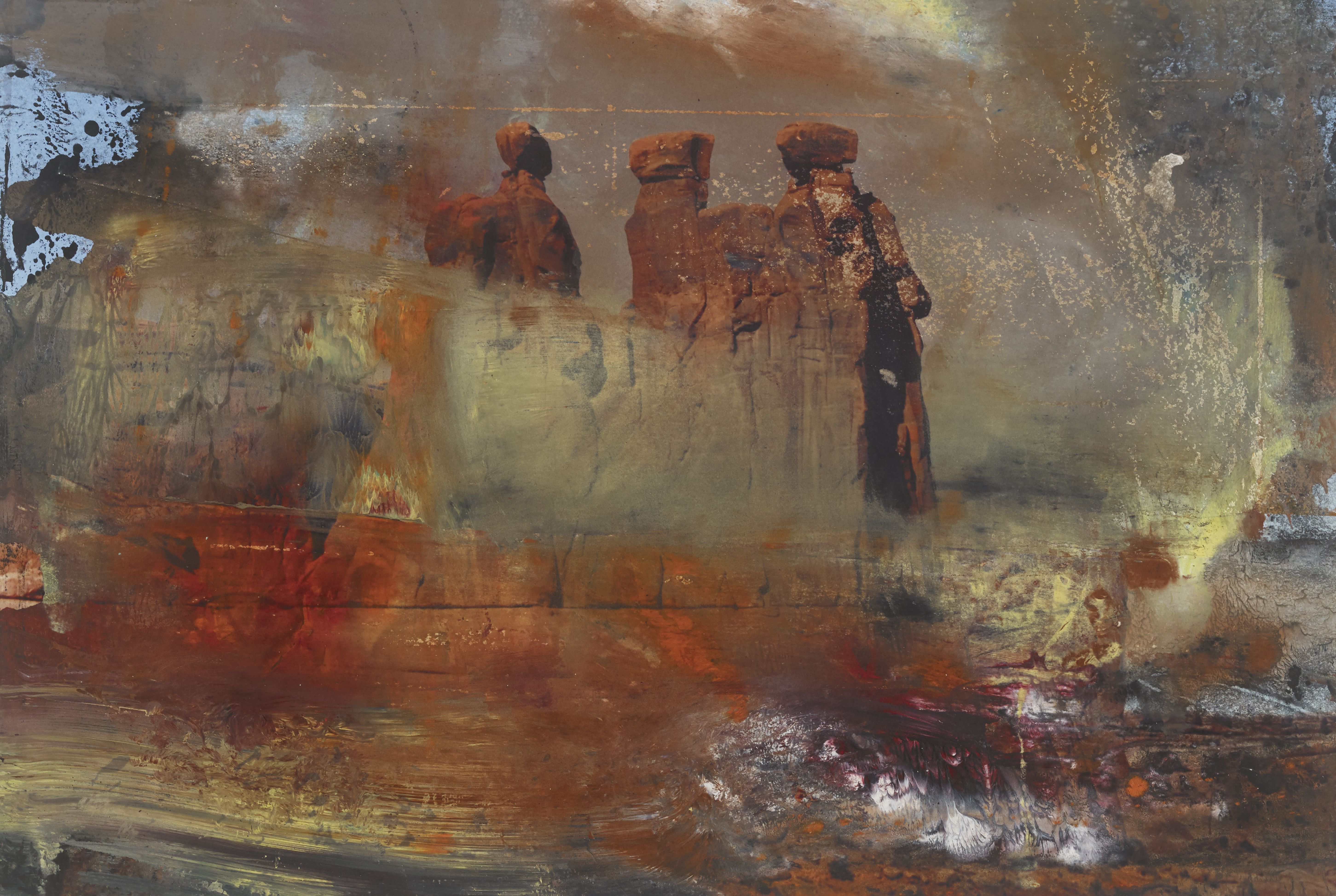
In the previous essay I have suggested reflection on the transcendental dimensions of painting. Rather than a radical departure from those thoughts, I want to focus on “just painting” as a natural continuity or parallel revelation of depth experience and meaning in painting.
We usually respond to our studio work and its outcome in the following manner: (1) It should go well, (2) the work should look good, (3) there should be something special to differentiate it from other works. We fail to recognize studio practice, fulfilled or unfulfilled, as simply painting actualizing painting.
What do I mean “simply painting actualizing painting”? We fully participate in the process of painting as actualization, that is, bringing something into existence. We trust the process as we continue to paint. We just paint. Shikan painting. Shikan in Japanese means “only” or “just”. The term refers to Zen sitting mediation particular to 13th century Soto Zen Master Dogen. Called shikantaza as in “just (shikan) sitting (taza)”.
Eido Shimano Roshi (d.2018) explains the use of the Japanese word shikan: JUST. One word JUST. JUST drink your tea. JUST pick up your cup…If you’re sitting, you’re practicing shikan sitting. If you’re walking, you’re practicing shikan walking. Shikan. If you’re eating, practice shikan eating…If you’re lying down, it’s shikan sleeping.“
Just painting” (shikan painting) is painting actualizing painting. At the same time, it is process-actualization. If we are truly painting, if we are deeply within the process of painting, we are shikan actualizing painting. If we miss the mark of what we are doing, we are shikan actualizing missing the mark. If the work turns out unsatisfying or worse, incomprehensible, there is no problem because we fully actualized the shikan process of painting. We just continue to paint, putting it all down naturally, spontaneously, without so much as a hint of good or bad, success or failure, past or future. Just endlessly renewing, spontaneously responding, all signals functioning like the inhalation-exhalation of our breath taking us where we need to be. We mindfully emerge from the egg of our creativity bringing forth with it a new life. Or, like the monk Shibei of legend, we persist in fishing, seeing the river of our moments not as an obstacle but as a watercourse way. Never expecting a golden fish to leap into the boat by itself without being caught.
But first let’s define what we mean by “process”. One way of looking at the process is a series of actions taken to achieve a particular end. More than a procedure of mechanical steps, we can realize process as an organic outgrowth of our natural phenomenon as painters that coincide with our strategies of doubt and uncertainty.
Contradictions, frustrations, and failures at first may abound. An existential negation is the initial stage that drops us into a dimension and position beyond duality and decision. We negate our swaying in every direction when all thoughts of control subside. Nothing to regard as probable or precursor, expected or predicted. Just the sudden awakening to the act of painting. No searching, nothing to block discovery. Painting as naturally occurring as the patterns of weather. Entering the process-actualization of “just painting” we are free of all thought of before painting and after painting. With subtle faith and trust all we do is just (shikan) paint. It is not complicated. Dropping all problems, thoughts of success and failure, intellectual understanding, just the simplicity of the hand holding brush to canvas.
Just painting temporarily is beyond judgment. I say “temporarily” because for the time being we only flow with (and within) the process. We allow each brushstroke, mark, splash, or drag of paint to be exactly what it is without rejection, reaction, or resistance. Connecting the work to an idea before its time or coming fast with an explanation, mental category, or label so nothing may change is a Medusa that can turn creative overflowing to stone.We let go of the idea of painting. We jettison judgment. We clear away obfuscation by putting into play subtraction aesthetics. Directed not upwards nor toward a ruling center, we find a center everywhere because we are de-internalized.
In a goalless practice that is radical in its directness we free ourselves forward to powerful sudden revelation. This is how we express the largeness of our work: we hold boundlessness within ourselves. Moment by moment is already total arrival, zenki, “total function”. We simply provide a field of opportunity.
Comments