The Necessity of Repair
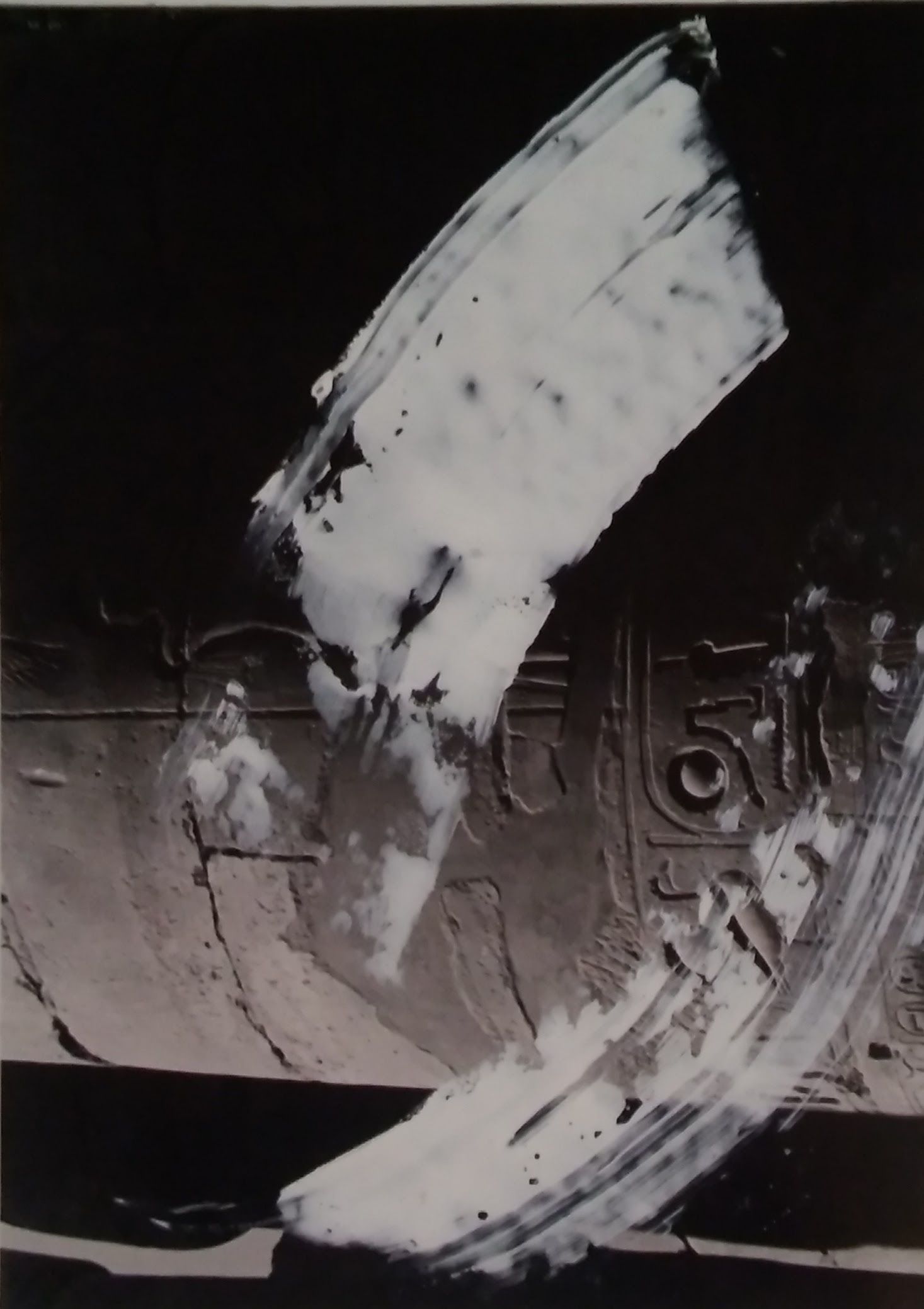
Walter Pater (English essayist, art and literary critic, theorist, fiction author and contributor to Aestheticism in the late 19th century) in his “Preface” to The Renaissance wrote: (I paraphrase) to see the object as in itself as it really is, is to discriminate it, to realize it distinctly, to see the work as a receptacle of many powers like a force of nature.
The present essay is designed as an action to take when the work is unable to unfold the force inherent within it. No rule or power emanates from it, no substance, no subject. Cut off from working because there are simply too many personifications split into countless multitudes of forms. Yet enclosed within its bounds is its essence or primal energy. Sparks within the stillness of itself. An inwardness desiring to be released, liberated from its shell. Herein is a model for the process of repair and a pathway toward reclamation, reconfiguration, restoration, renewal, reincarnation and yes, healing of the work.
Pathways of work need constant replenishment and fortification spiritually and materially. A complementarity between the aims and actions of repair to bring the work to fruition: a correction of the work that is also a correction of self as an internal object. Not simply the general understanding of what is beneath layers of paint. But to find the visible trace, the specific pentimento (literally, “repentance”) that corrects attitude and actions. The hint or reappearance in painting of the original ideal or feeling subsequently painted over or out. A regret by omission or commission taken into the work but with the possibility of returning to the original sense of the work by a realigning of energies. Repair not only as an aesthetic need but as a re-establishing of the broken relationship of the process. Most importantly, a turning back towards the primary source that is the actual not fictional ideal of painting.
Rediscovery and reintegration moves the work from the one-dimensional stare of so-called observation to a multidimensional, interrelated state of whole object relationship. When the work isn’t correct, for whatever reason, the inability to resolve it lies in the lack of psychic energy and its containment. By emptying out non-productive thoughts and actions, one becomes the “Master of Repair”. Brought back into the ongoing process but with a larger purpose unifying appearance, separation and repair heals the work, head, and spirit.
But it takes an iconoclastic attitude to be able to recognize the paradox of deconstructing the latticework of over-thinking and over-working. However, the beauty of radical repair is not knowing when and how something will spontaneously show itself. Presences evinced at the surfaces are like strange gestures of foam. These are not a series of impediments to be adjusted that will redress an unstable, unresolved work. And it is not always obvious what should be done. Yet they are actions at every aspect in the process of painting inextricably connected to all others and a single gesture of the brush may be incalculable to change. That is why it is important to identify what needs correction and repair to redress imbalances.
Troubled work has a secret and a temptation. It has a desire. But it is denied, suppressed, suffocated. At a certain point painting is no longer productive. Visual information is no longer information but deformative and cumulative. The work is consumed like some ever-new sameness. The proliferation of the same creates only forms of the selfsame. The more you work at it, the more the same presents itself. Process is no longer process but destruction, a mass of fragments, of indistinguishability. This is how autopropaganda and self-indoctrination looks like.
What I am suggesting is a way of working out of this conundrum that overwhelms creativity. Calculation won’t do it. You are blind to the event in which you desperately seek.
Insight is needed because it is transformative. It produces a different state of consciousness resembling redemption. It puts the work in need of redemption and repair in an entirely new light because it is redeemed from the state of lack or ego excess. Repair must be free of pre-formed behavioral patterns. It must be self-directed, a compulsion that eavesdrops on thinking. Looking at the work narcissistically will endanger the work’s growth because it lack eros, the universal binding force. But it is authenticity that makes every person the producers of themselves in ways often beyond casual thinking. Repair is stepping into the metaphor-flurry that redemption opens.
It is in this sense that the work can be seen as a vessel. A vessel or container with an outside and a yet undisclosed inside. A reimagined work not with a two-dimensional surface but as a total object that mediates its inwardness and outwardness by means of metaphorical language. In short, a new way of reading the work that transcends traditional convention and challenges normative insights: an object with simultaneous views, positions, or realities that comes into play when we attentively observe it. A kind of visionary apophenia that perceives meaningful connections of unrelated things in the work. Embodying particular qualities that are not just aesthetic but epistemic and ontic.
But the vessel’s contents, its essence or originary character, if out of balance and closed in on all sides, shuts in its light, its sparks or energy. The metaphorical shell or “bark” covering the work’s core presence is locked in as the result of the artist’s doubt or self-aggrandizement. If there is not enough energy to sustain the precursor it becomes entropic and breaks down. It goes nowhere. It sinks into limbo. It is at a standstill, without will. The river called Process sits in its place. Yet if the energy is too strong, it explodes into chaos and confusion, a composition fragmented into unrelated bits and pieces.
Looking at the work in need of repair everything seems to be cloaked by a combination of unknown elements. If only there was the correct key, the right technique or frame of mind, the work would open up. But one of the problems of repair or reworking is the enigma of transition from idea to action. How to bring about a new creation from the multifarious parts that refuse to come together?
In the chain of causal evaluation there remains some relationship, qualitative and quantitative, between the effect and its cause. Interlocked, connected, and interrelated is the basic relationship between the past and future of the work. However, this is not by way of a developmental order but by way of a leap or jump. A radical step that breaks the shells of gradualism and establishes a reforming distinction between cause and effect: an iconoclastic act or re-creation.
Let’s call this act toward re-creation contraction. Contraction not refraction or occultation. But a contraction of the maker that brings about space by withdrawing the ego so the hidden passed over and dismissed may surface. An act of self-limitation through the tangle of thought toward revelation. Not to impoverish the work by adumbrations of selected ego categories. The work is contracted, subtracted, in order to make room to jumpstart the process. Self-seclusion, that is, making room in the mind’s attic breaks the ego’s rigid containment of the work. Attention to the rise and fall of lost connections shifts the quality and intensity to make possible the re-creation of a pluralistic work of intrinsic unity. Exposing the root elements raises sparks that are truly one’s own.
Brokenness and renewal of the work through sight and action can be said to be the fullest vision of the work’s redemption. Laden with extended implications of spiritual arousal brokenness becomes an act of restoration echoing the Hindu cosmic vessel metaphor in the Sankhya-Vedic of Ajiva: a container that holds and diminishes the energy of the cosmos. We read of space enclosed by earthen jars going to pieces in cycles of restoration and recreation. In psychological terms it is the reunification of the divided aspects of the self, living and knowing, temporal-material and universal values.
As a subsequent rebirth begins to take place out of this brokenness the unresolved work relaxes its hold. The purpose is to rectify the discrepancy between the forms and their intended energies. Breaking allows for a new order that exhibits the mutual ingathering and harmony of artist and work that characterizes a stable whole. There is no longer “exile” but a redemptive act of attunement that increases the work’s metaphorical power. To be sure, repair is not the simple restoration of a prior perfection. However, the pathology that did not allow growth is gone. Sparks or energies are presented and accepted. An omni-directionality rather than a focused center courts rupture and re-growth. Reconstitution is new and humanistically better. A work re-experienced in the imagination that never existed before. Not just the outer form, the garment of the work, but the juxtaposition of the newly revealed from the newly hidden.
Unification is fully coherent resulting in dismantling or essentializing composition and thereby meaning by losing control over consciousness through the transcendence of time and place. For it is in the unconscious or in the silence of the preconscious that the scope of the human horizon expands. It is a return of image-making to its primal stratum in a mythological time preceding distinct categories, contexts, and meanings.
The metanarrative put forth has practical studio implications. Between the already and the not-yet, that which has been tried (unsuccessfully) and nothing else has come to mind, consider the metaphorical expressions which are both old and new that recognizes a deep voice that wants to be heard. But this requires a re-casting of normal distinctions between inner and outer work and the space between where the psyche speaks.
Beyond breaking or shattering of problematic work is a potentially different kind of work ready to be reborn. Rebirth is a foreignness that defines the new work as a “closeness of distance”: an imagining subject that flows with the object, places it alongside itself rather than against it. As supremacy over the work is relinquished, the work de-mirrors perception. It opens up less as an object and more of a true subject of attention. Most importantly, this is not another narcissistic structure that nourishes the ego. The breaking of the vessel of the work is the first step in repair and reclamation. It is a shattering of self-reference so that the action that takes place is an “actionless action”. There is no economy of the self to re-animate. Repair is enlarging the optics of soul.
In chasing redemption an exchange has been made. A known context rushed into a setline is now swapped out for something happening on its own accord without regard to outcome. Subverting the structure of work in need of repair and reconsidering it from various points of view recognizes the highest determination and distinctions without the limitations of ability. Repair is a genuine gesture of ultimate affirmation both metaphysically and ethically, opening creative play to the unintended: birth pangs of the radical consequences of futurity. It is to come face to face with the paradoxical moment when something changes into another, takes place before subject and object separation. In a similar way, breaking the metaphorical vessel of the work is a result of metapsychology as Nietzschean “creative destruction”. It can assign a specific task as an accelerant for repair integrally related to the practical discipline and self-transcendence of the artist.
In the right way it procures a different salvation.
Comments