The Importance of Latent Looking
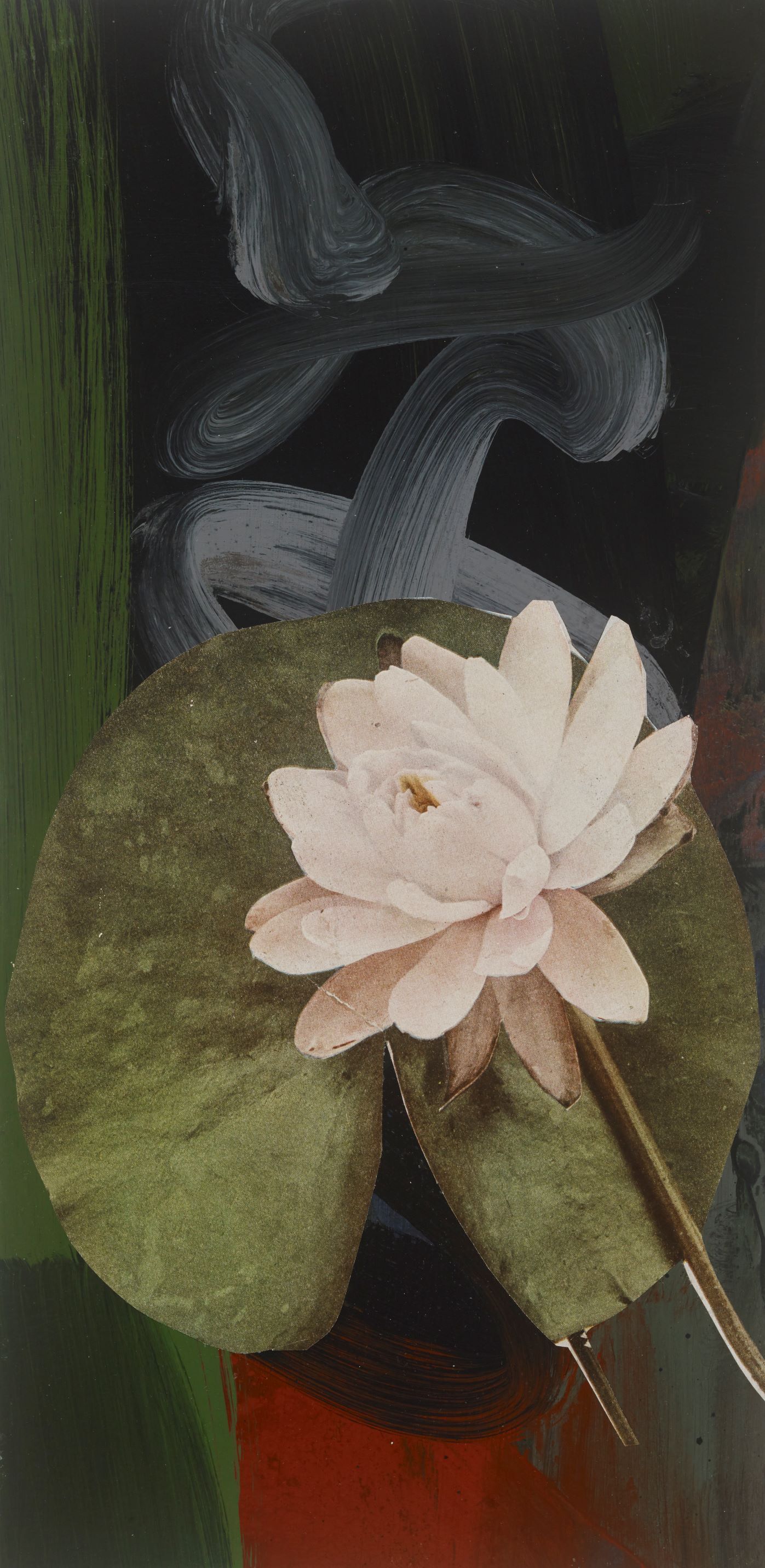
There is the sum of a complex exchange of influence back and forth among different domains of the work. It determines the face and form and serves as focal points for all processes. It is the background in which forms function, connect, and converge. A self-contained system or field in each of which all parts are related in a definite way to other parts and to the whole.
Acknowledging at the same time something emerging dramatically from beyond convention.
Pierre Reverdy (d.1960 ) wrote about the image in terms of “paratactic juxtaposition”: The image is pure creation of the spirit. It cannot be born of a comparison but of the bringing together of two realities which are more or less remote. The more distant and just the relationship of these conjoined realities, the stronger the image – the more emotive power and poetic reality it will have.
A displacement of a kind can have the latent effect of inciting the imagination. Freeing oneself at all costs in an interrogative position the imagination fills and moves outside the limits of commonly imposed and generally accepted creative activity. Looking at the work passively from this angle rather than another, liberation is affected in its purest form that is the lisping of a deeper future for your work.
There are two levels of looking. The first level is surface looking. Looking at, and for, the visible, i.e. the actual manifestation of the work: what is seen coming to the surface. This is easily perceived and recognized by the mind as obvious, evident, displayed. It has not yet tapped the inherent, underlying, unrealized or veiled. In other words, the belatedness of latent seeing.
The second level of looking is much more subtle and deeper. It is a latent look that allows for core-seeing. It exists but is not yet developed or manifest. It is dormant, a “bud” or resting stage until circumstances are suitable for development or maturity. It may not be obvious or overt at the moment but may develop further in the future. A delayed response to a presented stimulus. This visual latency is between seeing and a given response (or in the interpretation that might follow). The time delay between work seen and the moment of its effects.
At the bedrock of latency is its latent value. More precisely, its “non-value.” The latent potentially that has the fresh capacity for stimulating the wonder of obscure necessity above the cycle of common sense, habit, and labeling. Similar to “thinking non-thinking” (Zen master Dogen’s hishiryo), it is a realm beyond discrimination. Leaving thoughts, ideas, and views behind, success or failure, you don’t get caught up in the tangles of the self. There are no edges to non-thinking, nothing to hold on to. The dualism of thinking and not-thinking dissolves. An apperception or the psychic process as another way of seeing emerges. More focused on disclosing the inner shape and structure than the outer body, more on consciousness than perception.
We might call this inceptual thinking, that is, anything related to a beginning, creation, or inception. Watching first thoughts come and go but keeping the work as an event, the possible encounter that sparks embers to flame. A grounding or gathering of self and object that transfigures seeing and questioning. The “negative capability” or relinquishing control and need for answers in order to exist in the uncertain mystery of open-minded intuition. Keats might agree this is the basis of an appreciation of the latent. We know the bard Whitman agrees. He boldly sings in Song of the Open Road, “I think you are latent with unseen existences.”
Waiting is part of latent looking. It is the central achievement for tolerating doubt. Because to “latently look” is to stand by, watch for, and anticipate. A kind of scenting when the essence of the work is aroused and taken to the heart as it is. Artist and work become one, a silent force recalibrating experience.
However, prior to waiting something can be done. One can position oneself, not in a calculated, coercively placed, ordered, or replicable manner. But in a position that is waiting aware, ready to be developed, allowing things to come about. A positionality of presence that lays claim as the hidden originary essence of the work.
Haruki Murakami in his Killing Commendatore” (2018) gets it right. He has his protagonist-painter latently looking at the painting he’d begun: The idea sprang up suddenly, all on its own… without really thinking …naturally inside me, with no plan or goal. Like a child, not watching his step, chasing some unusual butterfly fluttering across a field.
Waiting on the latent unites elements in the work long since known but scattered and seemingly foreign to each other. It enables seeing at a glance each of these elements in the place it occupies in the whole. This implies the existence of a hidden but fundamental harmony that discovered brings order to apparent disorder and relinquishes your control of logical thinking about the work. Subsequently, it can prove a sort of key to unlock the work’s essential meaning as a subtle foreshadowing of what is to come.
Buried under the shade of the unseen lies the latent “I”, watching, adjusting in anticipation, a slow pulsation most vital. This is the underthought of the work, the frequency that vibrates from kernel to surface. A locus of inner appearance not seen in the outer form but possessing several levels of existence beneath it. The true nature of the work that exists along with the distinctive designs that constitute the individual identity and enacts this identity. In the spiritual sense, it is counterpart to the recollection of archetypes, the arc of Divine Proximity.
As part of the spatio-temporal matrix seen is the possibility of a creative cycle that is the distant shadow of a divine act. A scientia that possesses a law of its own that cannot be demonstrated only revealed. An eternity of a temporal order standing at the interface of oneness and separateness. A crystalized sacrament, latent and waiting, that is one in itself in the mirror of multiplicity.
Comments