Metaphysicum Abstractum
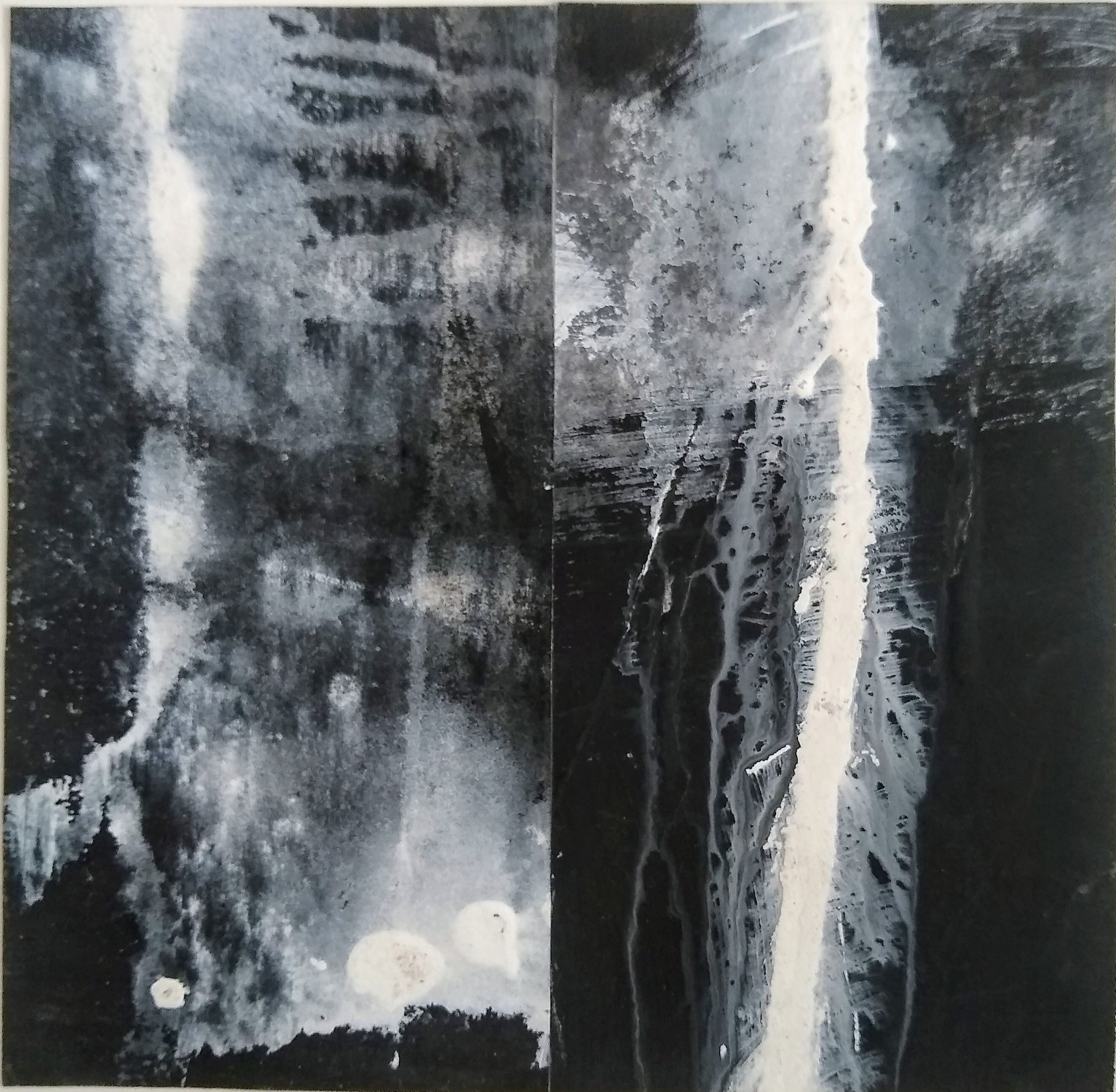
“Metaphysicum Abstractum”
I am large, I contain multitudes.
- Walt Whitman, Song of Myself (1850).
Metaphysical or intrapsychic domains can expand consciousness through the use of symbols, metaphors, and dreams. A plethora of pronounced new meanings in transit toward creative work. Far from being a sign of cultural fatigue they are unique visions released above the tides of convention.
Ideas, doctrines, or anything outside of ordinary human sense perception is said to be “metaphysical” (Gk., meta ta physika). A broad concept that tries to define an understanding of reality. Inherent or universal elements not easily discovered: the nature of mind, unconscious, appearance and existence, space, time, and/or causality. Intoxicating to some, self-originated, non-sectarian, and well-aired naked as a foot.
There is a cosmic inheritance to be collected, and if believed, octaves from the layers of many existences. Cosmic territory is an authentic place. A dream track in which the artist’s work allows successive births, each one unleashing the next. A first conception that derives its legitimacy and power in a constituting manner connecting the entire metaphysical structure. A self-disclosing transcendence grounded in discovering, occupying, and justifying experimentation that comes with a knowledge of possibility: preliminary appearance of form without intentionality, alert and self-creating. A release from the captivity of monologic thought like laughter from another room.
The Latin abstractus, literally means “drawn away” or “to draw off”. Abstract painters might say it is an attitude that does not consider what is real in the usual everyday sense but instead has the imaginative possibility that recognizes all realities as symbolic and metaphorical. In general, a strategy of simplification that ignores entangling vines of unnecessary details. Courting the ambiguous, encapsulating it as to lead to greater levels of reference, states of being, newer elements of creation instantiation is multiplied. Poetic revelation transcends objective articulation. Paintings point beyond themselves. Here is the ungrounding of conventional linguistic and aesthetic function that sets our work free from the edge of breath into the night of high stars.
Like all forms of painting, abstraction in painting consists of spatiotemporal properties. It has an appearance but not necessarily the representation of an accurate depiction of anything. Instead, the eye distinctly communicates through lines, shapes, colors, and gestural marks. Abstracta collected under the category of metaphysical abstraction is a love for universals that include propositions, properties, and relations along a wide spectrum of depth experiences and meanings. In general, abstraction prioritizes instinct or the unconscious delivering a diverse range of forms. It prizes ambiguity and the lack of literalness taking non-objective elements as a means to explore ideas beyond the canvas and what is thought of as physical reality. It is both emissary and message.
Not only their outer form but their inner life, paintings have been recorded in the earliest Chinese instruction manuals as having “spirit resonance”. Wassily Kandinsky wrote in his “On the Spiritual in Art” of an “inner sound”. Leonard Cohen’s search for a “sacred chord” gave him the inner necessity to write and compose in ways that were consistently illuminating and surprising. The metaphysical-individual equilibrium is a profound interiorization ordered by supramundane principles not vague subjectivity.
Although painting can be an exercise in spatiotemporal judgment, radiation of the metaphysical seeks an outlet towards regions not ruled by time and space. It touches on another order of consciousness. As an epiphany of self-discovery, it can under the right circumstances re-imagine the larger possibilities of the world and studio practice, liberate insight and aesthetic virtuosity from the closed container of thought. With the force of an icon the work transcends itself. Ringed by something more than the visibly explained there is another kind of perception that goes to the center of individual awareness. A numinous dimension that is immense, intimate, and human. Lucid, instructive, and profoundly felt it is marked by the mystery of falling into one’s essence.
First principles of the metaphysics of painting: revelation of the image and its intuitive identity, a regard for the psyche, the transcendent dimensions of what we don’t see but feel and are called to witness. Artists each have their own nature and circumstances so there are many ways to look at and respond to the work. This is hardly illegitimate. The criteriology is elementary but sufficient from the point of view for assessing the work and subsequently providing a platform. But the metaphysics of painting is Monchsgeschaft, “monkish business”. A search for eloquent signs of a higher order, a “from somewhere” quality. A climate in which cosmology, origins, and the existence of non-physical entities can be seen and have cause, although not empirically verifiable at the time.
It is not an issue of realism versus anti-realism. What the metaphysics of painting signals is an investigation into the nature of self and reality. The transcendental idealism, far from being anti-realist, rests on the perceptual and conceptual faculties including how the artist speaks to her work, how the work speaks to her, and how it corresponds to different concepts of seen and unseen, that is, symbolic and metaphorical points of view. Whether the work has essential properties without which it would not exist or whether these properties are accidental or spontaneous.
In the spirit of Plotinus’ hoion,“as if” or “so to speak”, we can reappropriate unconventional, strategic, purposeful activity for unexpected “something other” in painting. A manner of playing with paint that is a sudden intuition, detached and unpredictable, transcending the bounds of habit for a more immediate way of experiencing the practice. Spontaneous, direct, unmediated working, unrestricted and without preparation, unsealing the mind of its creative power.
Free association is a technique naturally at work in the process of painting and can be further applied to widen consciousness. Similar to the “skipping and jumping” of the 13thC Spanish kabbalist Abraham Abulafia, Freud inspired by Abulafia, between 1892 and 1898, put free association to work with patients. As the patient spontaneously “skips” or “jumps” from one idea or image to another noticing the connection, each skip or jump opens a new space where the mind freely associates. Looking at these different perspectives without labelling any view right or wrong, without censorship, was an aid in gaining access to unconscious creative sources.
It is important for artists regarding free association to give the mind over to the immediacy of visual prompts or stimuli. A powerful and fast exchange of energy between artist and work of art shows itself in an active form much like the Surrealist use of automatism. There is the unfolding from the infinity of the unconscious into the consciousness of differentiated reality. By looking for a trace, symbol, or metaphor of macrocosmic actuality, one begins to see a process of becoming in the work as an ongoing event seeking to flow out from itself. The interchange of thoughts and feelings, conscious and unconscious between the artist and work take an intersubjective perspective. Essential and unchanging, under the veil of different intuitions and formulations energy is constantly replenishing and fortifying spiritually and materially.
The influential British psychoanalyst Wilfred Bion (d.1979) sees the redemptive power in what he calls the “alpha function” that can change undigested “beta elements” (unprocessed thoughts and sensations) into integrated materials of appearance similar to a chemical transformation. Influenced by the kabbalist Isaac Luria (d.1572), Bion believed there is a conduit for sublime values and supernal determination that can lead to the discovery, uncovering, and recovery of energies inherent but “imprisoned” in one’s nervous system and by extension in one’s work. This idea, mutatis mutandis, is called “extraction:” pulling out the missing bits and fillings found in the cracks of the work.
Metaphysical Abstraction gives rise to a multiplicity of perspectives and actions in a kind of polytonality, the simultaneous occurrence of two or more unfolding and regenerating tones. It serves to inspirit conscious functioning on other planes of being as well as a means of accomplishing the rectification, reclamation, and reintegration of self and deep work. An “outpouring in which something swells within itself” according to Meister Eckhart “initially flows into itself, each part into each part, before it boils over and pours itself into the outside”. The macroscopic or wide-angled view that allows a mercurial awakening to increase the quantity of its qualities as a sight-based blessing.
Comments