July 2023 Arete or Quality of Painting
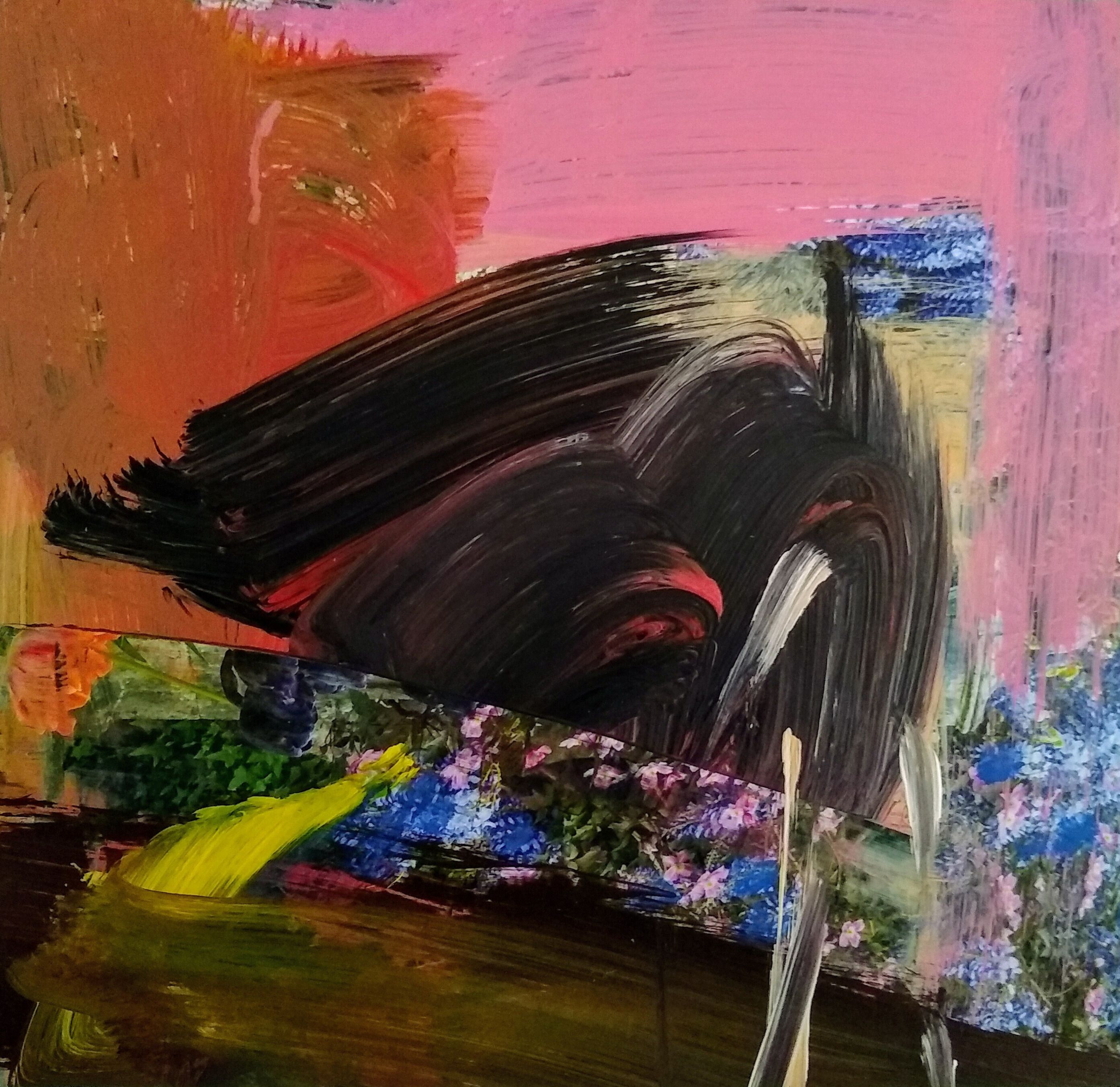
Arete, or Quality in Painting
For Dan
In the Iliad Homer has Achilles’ father Peleus urging him to “be the best”- to possess arete. (“quality”, “excellence”, or “virtue”). In the Odyssey, old Laertes rejoices when his son the legendary hero of the Trojan war Odysseus, and his hot-tempered grandson Telemachus argue over the meaning of arete. For Plato (Allegory of the Cave) there is an eidos (“what one sees”) in arete. Aristotle (Ethics) emphasized arete as virtue, and later Socrates (d.399 BC), gave arete true philosophical attention.
If quality, excellence, or virtue is what you want in your work questions should arise such as: “What does “quality” mean to me?” “How do I define it?” “What quality decisions do I make?” “What is my approach?” “Is it a one-time exercise or a continuous improvement?” “Will it conform to my expectations?” “How is it measured?” “Improved upon?” The consequences of your work begin with the nature and the things you value. Looking at your work or the work of others may tell you what you value and what may be fitting for you.
Our first step toward understanding arete is to explore the meanings of arete despite being refractory and ambiguous. Terms like quality, excellence, skill, good, value, virtue (that I make companion to virgin!), virtuosity, and integrity are not in any sense meant to be dogmatic but as a fountain-source that flows into your studio practice. The present essay takes a look at arete in some of its manifestations and linkages. Each meaning of arete may seem somewhat different. I see them as standpoints (points of view) and less as “translations.” How they bear upon your work is for you to discover.
Standpoint 1: Arete in General
Arete in early Greek literature was central and vital having to do with an individual’s fulfillment of purpose and potential. The poet Theognis of Megara (6thC.BC) – the first poet to express concern for the survival of his work - says we must, even to the point of wearing ourselves out, be resolute and unswerving in order to achieve arete. Employing faculties social, intellectual, and emotional. Being competent, precise, decisive, and problem-solving. Accomplishing tasks and identifying new challenges. Overcoming obstacles and distractions. All of the above packed into this small but profound word. Add to this a sense of virtue rooted in what can be considered “good”.
In the most basic sense arete refers to excellence of any kind. It is an inherent function, notwithstanding morality, and wit. It was associated with “manly” qualities, though Homer applied the term to both Greek and Trojan women such as Penelope, wife of Odysseus.
Arete is closely related to the Greek ergon (“function”), agathos (“excellence,” “good”) and aristos (“nobility”, “supreme ability” or superiority in general). Actions particular to humans but also to objects and conditions. The paradox is that arete is acquired by not consciously trying to acquire it. The intention of being rewarded renders it null and void. There is no big payoff, nothing to win or succeed. It is a kind of psychic energy that only seems to work not thinking about it. Trouble comes when you begin wondering if it might be worth something.
When it is complete in oneself, arete can be read in a moment as it is reflected in every feature of your work. Body language, emotional approach, and trust are valuable indicators. Looking for signals from your work when your guard is down, the mind empty of self-interest. Hatched from the egg of arete skill and cognition meld external act and internal intention. It is subordinate to the process and absorbed to the point of forgetting your own existence.
Standpoint 2: Quality
The word “quality” has wide application and may designate material, immaterial, individual, or generic properties proper to your work. An active knowing moment by moment, quality varies from object to object, person to person, culture to culture. Yet we know what quality is when we see it. Left undefined, it can become a vehicle for change in your work. A “rightness” that gives structure and purpose to what you do in the studio. It belongs to your work in its essential nature. It is not an attribute for that implies a lack of knowledge in what you are doing, something ascribed or superficial rather than indispensable and determining. When the self is not there, when rational steps are skipped over, when there is nothing left to do – no personal anything – at that moment quality can be apparent. Even an “accident” of the brush can indicate quality if you recognize it. In the art world quality is diminished for increased marketing, sales, and profits. There is quality fade. This becomes apparent as quality appears static because it is based on the easy repetition of stale customs, old ways of knowing and doing, calcified or novel psychological theories, work-shy or incomplete actions. Static quality swims in the wake of dynamic quality that announces itself in naturalness and spontaneity, commitment, and the efforts you most value. Criteria that should be de rigueur among artists: rigor rather than rigor mortis, thoroughness rather than incompleteness, precision rather than inexactness. Never the same studio work all over. Dynamic quality directly perceived creates the work. It moves towards freshness, authority, economy, clarity, mystery, depth, and brilliance. An event-flow that engulfs both subject and object.
Standpoint 3: Excellence
Excellence by Tennyson’s reckoning is “Faultily faultless, icily regular, splendidly null. Dead perfection, no more.” There is no mention of the merit of surpassing oneself or moving from an ideal to an active state. Excellence is not a flower plucked from a lost Eden, though there is éclat, a preeminent “bursting out” of brilliance. A blossoming of what Buddhists call “skill in means”.
To have excellence in what you do is “skillful means” (Skt. upaya-kaushalya; Ch. fang píen; J. hoben). More than cleverness as some have translated, it is a concept of Mahayana Buddhism used as an expedient two thousand years ago to foster enlightenment. In the studio this can help you realize your excellence-potential through constant experimentation. You quickly discover what works and what does not. You provide yourself with an open space that is situation appropriate, provisional, and potentially liberating. Although there is a transcendent aspect to skillful means in the perfection of insight, as with excellence, it is without hierarchy. One other thing: when you care about what you are doing, the internal and external aspects of excellence migrate from static patterns to dynamic quality.
Standpoint 4: Good
Arete implies a fitting. It is appropriate with respect to circumstance. The right thing at the right time. The “good”, “right” or “correct” notwithstanding any Platonic essence. With good comes a purity and freshness of action, touching on rareness. Thoreau advised “Be not merely good; be good for something.” A Buddhist would respond: “Be not merely good; be good for nothing.” You might recall Camus’ Sisyphus. He turned the rock into a roll of bliss. He exercised his highest faculty fulfilling Aristotle’s noble “good” (agathon) as the ultimate aim in life.
To do the best you can with your work is to value it. Extrinsic values like usefulness, contentment, and wonder entertain and are sufficient. But it is the intrinsic values that make you feel at home in the work, a discernment that removes any blockage that disallows its nourishment. It is a value that precedes process or progress. Because the sense of what is good carries the work freely forward. A core value that is non-negotiable.
You are living in a time where every value is called into question or rejected. Listening to the daily news there are those who wish to live without value, the good, the excellent, or quality. You are told these are ill-suited in both the social and art worlds. It is understandable that rigidly specifying any way to do things destabilizes that way of doing things. Specifying what is valuable can destabilize that value. However, value is not simply a judgment or description but an experience. Between you and your work lies its value. It is immediately disclosed within the process as an empirical reality. The smallness of the quantity in its current currency only heightens its quality.
Standpoint 5: Virtue
We get into trouble when arete is translated into “virtue”. This is the Victorian virtue of sexual abstinence, prissiness. Ritual conformity to social protocol. You have to be careful not to emphasize its canonical overtones.
Virtue as integrity is associated with “power” or “potency” in an efficacious and non-moral sense. Perfected skill gained by following a course with maximum effect. There is also innate skill, an inborn virtuosity. A non-coercive persuasiveness that leads to mastery. What you do without trying is like the involuntary beat of your heart. What you see like no other artist sees and the mysterious unintended results of that seeing. Beyond the distinctions of profit and loss, success, or failure you cleave to natural lines through seams and hollows, spine-tracing your inner spaces. You live your work with polythetic meaning. Intrinsic virtuosity is a sinew of being. It will give shape to the fullness and harmony of your practice. It will slide along with the process of painting without high-handed self-discipline or ostentatious independence. It is Course Coherent. Containing everything in itself, all things arranged into mutual consistency and soundness. You may go through innumerable transformations while working. By being balanced and at ease, intrinsic virtuosities will remain whole and intact, “chaste”. They will spring into action when impossible not to. It is in this that you have come to free yourself. To become midwife to the birth of a discrete and open consciousness.
Standpoint 6: Virgin
Though not a translation of arete, “virgin” can be said to ride tandem with it. Before the year 1000 the Latin word virgo simply meant “maiden”. Around 1200 it was an unmarried or chaste woman noted for religious piety. The Latin virginem or “maiden” also meant “fresh” and “unused” (like a young shoot of a plant). Since 1400 it was also applied to a man as a “naïve or inexperienced person”. There is evidence “virgin” came from a combination of the Latin word -vir (“man”) as in “virile” and -gyne (“woman”) as in “gynecology”.
Some claim “virgin” was derived from the Greek that meant “not attached to a man”. A woman “one-in-herself.” One’s own sovereign: powerful, skillful, sexually independent. The Greek word for virgin, however, was parthenos which builds upon parthenogenesis, or self-fertilizing (as reproducing without a partner). It is this “birthing oneself” we will explore in the light of studio practice. Since the mind is promiscuous you must first understand what is meant by the not-yet: the unexplored and untouched, the empty and waiting. There must be a clearing or contraction as preparation for newly conceived consciousness that will make room for the arrival of revelatory appearance. Only when you are “unmarried/free/unattached” *(ledig)*will the tangled weeds of preferences and emotional accessories drop away. There will be a new intuitive way of looking and seeing. Devoid of all “foreign” thoughts and void as you were when you were not-yet. Without attachment to word or image, empty of false determination, you will be in a state of pure receptivity “to conceive,” “receive,” and “to welcome” (enpfangen). “If I really want to write something, I must erase and eliminate everything that is already there,” writes Meister Eckhart (14thC.). Mental images, concepts, beliefs, judgments, instrumental reasoning. You approach each work virgin as a vacant vessel amenable to filling.
In Summary
It is not enough to bear in mind what I am saying. You have to make arete the foundation stone upon which you work. This is where the ideal and the real coincide. But quality, excellence, good, value and virtue will not show itself as a deliberate pursuit of a consciously valued goal. It will show itself in the process at a slant, in the depth and comprehension from the corner of the eye. Being the agent of consciousness, it will be a summons to existential risk.
Comments