Inrushes of the Heart
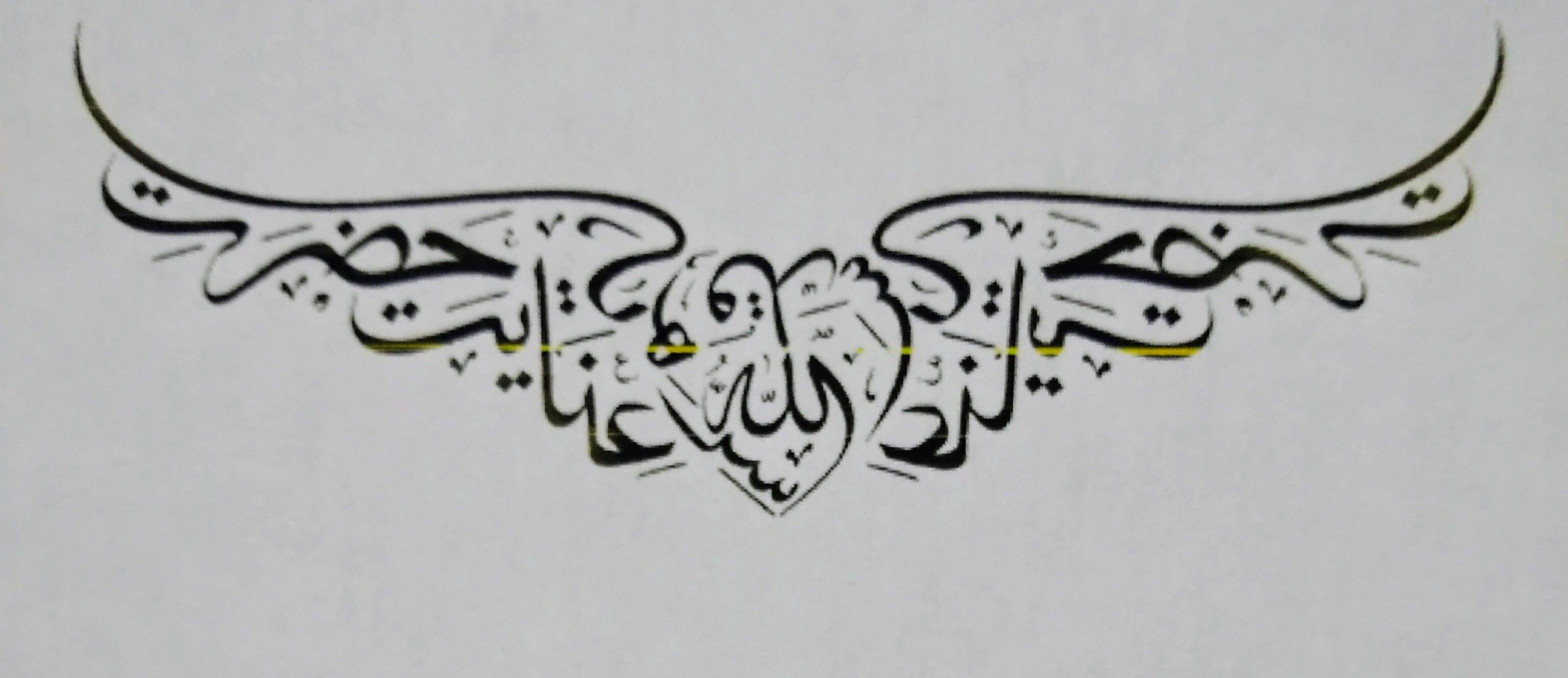
*And I am here to build hearts.*Yunus Emre (1238-1320)
Thought exalts the level of interpretation yet never scratches the surface of that timeless, wordless, primal sense. We flirt with points of departure but from our limited view it is a sequence of events measurable in time. A dichotomy of finite segments without inclusiveness, a Night of Separation. Unnoticed is the scent of unity and its sustaining glow of profundity that leads back to one’s origins. As though our souls can never be equal to our bodies.
True work comes into existence with new breath. The technical work in the studio is deployed in a process that is both self-concealing and self-disclosing, regardless of the insistence of the mind and the weight of intention. Opposite pairs of soul and mind, flesh and cogito rather than disparate and imprisoned, perform a single task. Cultivated for common harvest, they are the source of movement without which the universe would be void. A fundamental implication that engages the entire person because it brings into play the most secret sources of energy. Beyond the servitude of form and devoid of the self’s cracks and splinters but with flexibility and assembly there is a penetration of meaning without end, a completion without closure. An announcement that cannot be expressed otherwise because it is concealed behind the curtain of the Unseen. Hidden in the retreat of No-Place.
This is the dramaturgy of potentiality. The possibility of exodus from Darkness. The express engine of inexpressible life in our time, a mode of being that is the “heart”. The heart that is the center of the human microcosm and also the organ of unitive knowledge associated with intellect (not the current sense of reason) that has been lost, forgotten, left behind, or otherwise marginalized and neglected. The place where intuitive knowledge is fostered. The often-unexplored world of emotions, beliefs, memories, and the patterns that govern perceptions. A witness for those lost things which still remain and haunt the outer margins of the experienced world. The imaginative faculty that is transformed to create and reflect higher rather than lower levels of experience. The “sonorous space” of metamorphoses.
Painting is an erotic prayer. A powerful source of psychic energy. An aboriginal instance of radical astonishment. The locus-manifestation of a peculiar vision as mirror and goal on the point of equilibrium. Reflected in full splendor and amplitude of an imaginative spirituality actualized and acquiring uncanny perfections. Transformed so that each level reflects something that determines our ultimate identity. Composition and decomposition, ascending and reascending to what has been acquired. Comprehending manyness in its own oneness. The subtle beginnings of an imaginal arena that is No-Where, Now-Here.
Between fleshy heart and metaphorical heart are infinite levels of consciousness and self-realization. Gate and center where the creation of things trapped in the solitude of our subjectivity are returned from a “disjunctive knowing” to the extensive self as a discrete and unbroken conduction. A continuous compliance that guides, anticipates, and molds sense perception. For Henry Corbin (1903-1978), French philosopher and theologian, “the Burning Bush is only a brushwood fire if it is merely perceived by the sensory organs”. Initiation signals a rebirth into the uninterrupted openness that provides a secure foundation for radical autonomy.
In Zen and other forms of Buddhism heart and mind are not separate but are a single, unified “heart/mind” (Pali; citta, “mind”, “heart”, consciousness”) encompassing thoughts, feelings, consciousness, and intuition beyond dualism commonly thought. A holistic view avoiding reductionist thinking, such as the idea that one is real and the other is not. A unified consciousness rather than prioritizing the head over the heart, thereby creating a false separation. The dawning luminosity of the subtle heart, an image for the realization and fulfillment of self and an image for the surrender of self, however, is prior to any evidence. A spiritual conviction is required rather than proof.
A style of presence that belongs to the soil of the soul. Immanent and transcendent the metaphor that extends our reach beyond our grasp, stretches beyond the veil of paint and canvas toward the imaginal domain that solicits hearts-of-a-kind. It permeates everything while it is more than everything so that the entire universe happens in it. It is the point of consciousness, an “am” rather than an “I”. Resting in the interstice between this and that, between the black fire and white fire of words on this page. A duality balanced as focal awareness. Not a concept but a nesting of attention to the activity of consciousness sustained by belief and focus. The carrying back of creativeness to its origins transforming the visible into its symbolic or metaphorical liberating the spirit pinned down in matter.
As inrushes of the heart, they are intense spiritual and intellectual insights about oneself and one’s work. Powerful flashes that accompany appearance (Gk. -phany) of the “true image” (Imago). The term “imagophanic revelation” I invented to express the sudden appearance of the Image. The out-of-conventional something totally new as the seat of profound intelligence and imagination regarding practice and human agency before the colonization of ego-consciousness.
These inrushes are not the rush of blood into the heart’s ventricles during the relaxation phase of the cardiac cycle, nor the symptoms of high stress or irregular heartbeat. It is not the conical organ of flesh situated on the left side of the chest although there is a certain connection but the spiritual heart, the metaphorical heart, that pumps the blood of the imagination. The space that Diogenes of Apollonia held was the stuff of consciousness and medium of sense perception located in the chest. The charisma of cardiognosis that has attracted mystics and has been the basis of ascetic, ecstatic, and contemplative experience. Believed to be the ultra-fine organ that produces true knowledge and comprehensive intuition it is also the specific center of divine love. A paradise in which all of us are native.
We long to be awakened from our anesthetic sleep. Expressing itself in the symbolic language of abstract painting, the heart as metaphor is perfect as an aesthetico-spiritual organ by which the secret force or energy of pure hierophanic knowledge in its unveiled state acts as a mirror. Everything is reflected, projected, and realized (“essentiated”) including the external painted work. A way in which we recover the sense of who we are, where we come from, and what we are here for. When the “eye” of the heart opens, inner realities hidden behind outer forms become apparent. Like al-Ghazali’s (d. 1111) “polished mirror” in which seeing is knowing makes the connection between the primacy of vision, knowing heart, and perception. The eye determines the point of orientation not only in space but in time as an inwardly experience. Not on the horizontal plane but the vertical dimension where its “astronautic” mode of perception raises it to the power of symbol or metaphor.
Merleau-Ponty (d.1961), the French philosopher of phenomenology, saw painting as being more real than the actual thing seen. He believed what the world lacked in order to be a painting was a carnal kind of perception. Not judging anything from the outside but digesting it on the inside. As all perceptions are localized and enabled through the body, perceiving and perceived are experienced as annexes or extensions. Undivided as they are, they are embedded in the network of perceiving subjects.
This led Merleau-Ponty to speak of a “fundamental narcissism of perception”. The idea that we can perceive and be perceived at the same time because our own body is both a perceiving subject and a visible object in the world: whatever we see and whatever we are seen by. He recognized one’s own body (le corps propre) is not only a thing, a potential object of study, but a permanent condition of experience. A constituent of perceptual receptivity to the world. He tied this to the primacy of perception rejecting the traditional mind-body dichotomy. “Narcissism” describing the paradoxical state of being both inside and outside perception. A “loop” where the artist-perceiver is also a part of the perceived reality. The ontological levels and illuminated attendance to objects unfolding as subsequent archetypal-entities hitherto unnoticed.
While Merleau-Ponty focused on abolishing dichotomies such as subject-object or matter-form, his ultimate aim was to crack the duality between primordial existence and humanity. For example, the body touches and is touched at the same time. Because it is impossible to speak of them in neatly dualistic terms there is provocation into uncertainty: when is the inner outer and the outer inner? Like a Zen koan this has the potential to wake artists up from the sleep of second-hand constructions and reconnect with a single existent.
The “dual essences” - the image of the knowing heart symbolized “with wings” and the hollow muscular organ that pumps the blood through the circulatory system - share an affinity in metaphor and reality. But as every existent-entity reflects the fanning out of an archetype in a world of constant transformation, it is the intuitive and experiential knowing heart, through a progressively deeper relationship with reality, that moves from a theoretical understanding to an intimate, lived experience. A heart-based knowing that receives transformative insight instantly as a tension between construction and reconstruction, creation and re-creation, imagination and memory, appearance and revelation. Images that anticipate the image-maker.
The uncanny metamorphosis that is multiplicity and the transformation of forms reflects how we see. An epiphanized vision that is never a definition, only a mystery. The medium of paint is revalorized to such a degree that it becomes the basic tool of self-knowledge for an archaeology of one’s vision. The image is recognized and therefore betokens something that is not illusory but real and meaningful. It raises sensory data to a high level, transmutes the outward into the inward, and permits it to fulfill its visible manifestation. Moving from the apparent form of the work to the hidden real form, it is renewed and recurrent from instant to instant.
The truth is poetic as it is precritical in the economy of artmaking. The artist creates the object of analysis and predetermines the modality of conceptual strategies to explain it. A refusal to work within or adapt to established formal and methodological standards is necessary as a willingness to reenact, elucidate, create and commit to moments that require surrender. Inrushes of the heart open the world to cosmic play. As the cocoon of the ego collapses there are more dis-solutions than solutions.
Gazing far beneath the surface of “selfhood visions” to an interdiscursive view of one’s work depends on the spiritual station of the artist. Multiple relationships among intra-, inter-, and extra-realities like finely polished diamonds glitter to provide the heart with a pathway to theoretical musing of imagination and pictorial discourse. The question is not whether or not the subtle heart exists but whether or not its existence can be perceived. When art becomes philosophy it includes its own criticism or explanation in order to make sense of the work that seems unreadable or difficult to know. Philosophy that is more like art, rather than the other way round, would drop the endless questions and unsatisfactory answers to create something more poetic for the expression of difficult thoughts. There is only what is seen and not seen. A transcendent Essence essential to oneself: the immanent beauty latent within the heart. And what winds it.
Here is the time for the tellable. Painting is more than what is looked at. It is an expression of preverbal experiences that are the raw feelings of existential conditions and ecstatic confessions. How it is seen, it has nothing to do with style or manner of execution. Nothing to do with subject matter, sales, or showings. It is beyond all that nonsense. Authentic painting must be the dominant conception of our days. The intermingling of human will as well as a model of comparative themes revealed in epiphanic action. The artist still owns it, but it does not belong to her. Investigating the image outside habitual seeing creates new paths beyond conventional reason. Paths of deep feeling and fertile imagination that accelerate the beat of the heart as an encounter rather than a representation. In the process visual worlds of physical and non-physical energy are carried from artist to painting and back again. Metaphysically speaking, the inner and the origin ultimately being the same reality. However, the heart is also a gate. It won’t open except to true need and true longing.
Become a person of the heart*-or at least a devotee of one;Or else, you will remainlike a donkey stuck in the mud.**If one has no heart,**One can gain no benefit;In wretchedness, onewill be famous in the world.* Jalal al-Din Rumi (1207- 1273)
Comments