Fermenta Cognitionis
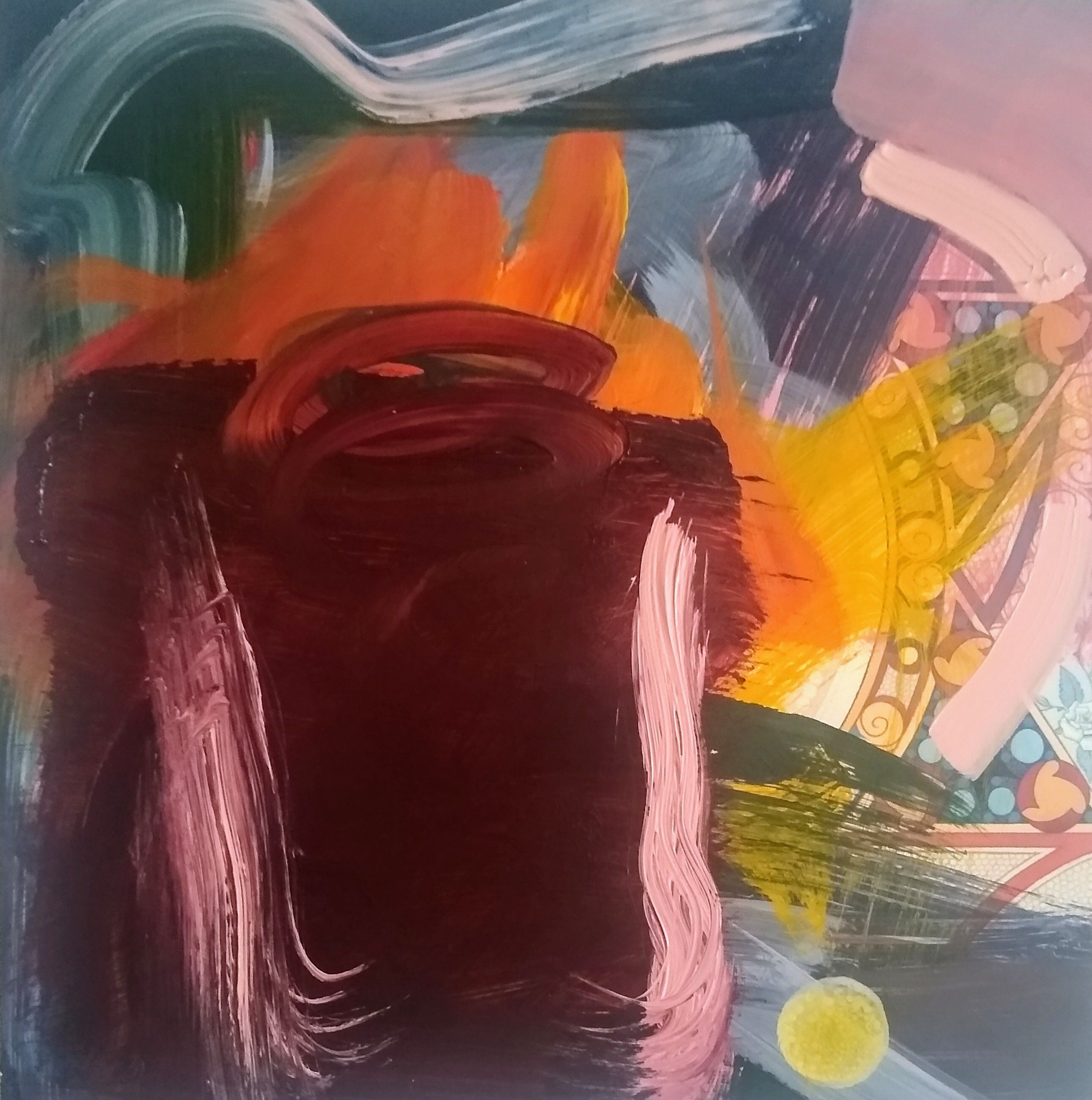
Resonation
Resonation is the production of a deep, full, reverberation. An evocation of feeling or recognition with the Work in a way that is poignantly meaningful, in which something corresponds to experience or belief. Specifically, the word describes the process or state being filled with sound, evoking an emotion: a homesickness for solitude, the great Aveof grace, or the ah-ness of life what the Japanese call mono no aware. The sensibility that acknowledges the transient nature of all-inclusive existence and beauty arising from its fleeting moments.
The guiding disposition arises from the first intimation of what the Work might be. But it is the essential occurrence of the completed Work toward recollection and resonance that is its authentic, albeit hidden power. The task is not the description, explanation, or ordering of something objectively present. But a readiness for “ferments of knowing” (fermenta cognitionis) as the German philosopher, dramatist, and art critic Gotthold Ephraim Lessing (d.1781) meant: the acquisition of knowledge based upon intense questioning and critical thinking that nourishes understanding and leads to new insights.
Inspiration
Inspiration finds its greatest depth in the Ocean of Being. Superintendence makes it a trustworthy and safe guide concerning the salvation of the Work. Where every stage of “blindness” is cured. As an animating factor and as a mirror of futurity cast upon the present, it implies preternatural quickening, the free and enthused flow that attends artistic creation. The word enthusiasmderived from the Greek, which is etymologically the equivalent of the Latin inspiration, characteristically implies the infusion of divine afflatus. The word is from Middle English (“divine guidance”) by way of Old French from late Latin, inspirare(“breathe into”, “blow into”) with the general sense to impart a truth or idea to someone. The power which compels utterance, or in our case, the fine frenzy that rolls out visual effects in our Work. It is something (or someone) exceptionally motivating and causes a strong feeling of encouragement or admiration. A profound and positive influence mentally stimulated to do or feel something creative. The fact that the Work can say more than it says, the ability overflowing with the first sparks of intention toward an “otherness” or “revelation”. A drawing in of breath, a “breathing in” of idea, purpose, or creative impulse, without any organized or programmed content but awakening to the proximity of the Work, whether in process or resting in completion. The white sail of “here I am” presence that is the “infinition of the Infinite”. This exposure to Otherness, to something powerful outside us, is the “production” of transcendence. Coming from the artist as a dialogue partner, there is the order and the response to and from the Work. We are at the heart of provocation and ambiguity. Follow your inspiration back to its core until all concepts disappear, until you come to a place of periscope point of view and aesthetic continuity. Where the past waits to occur again and sanity profound.
Spiritual Longings
Spiritual longings persist in the unconscious currents of the imagination beyond the function of knowledge and language. In the moment central of our being, a hole in the corner of memory, a silence and a sense, like a frayed dream. A passion we feel but do not fully understand. The particulars of rapture, interdependence of opposites, the function of the creative imagination and objective reality becomes a songline through the wilderness of mind and heart. In the words of American modernist poet Wallace Stevens (d.1955) like “winter and spring, cold copulars embrace and form the particulars of rapture come.”
One face, multiple mirrors of representation, symbol and metaphor become the form wherein the absolute is experienced and realized in an unmediated way. The gap between noumenal and phenomenal realms, finite and infinite, material and spiritual, sensibility and reason surmounted. There will be no sacred herbs to cleanse spaces of negative energy. Only the ferment of appearance that is impermanent existence. The question revolves around the formation of form, image, and notion that places it in immediate relation to the formless absolute truth. This is the power in its givennessover us. Our Work and interpretation that always alludes and outplays us equally. Such that the Work will always remain “unfinished” and “incomplete”, for it belongs to our condition to be on the way to somewhere else. Yet it haunts our memory as something we never quite attain, and through our existence strives as both wound and hope.
Seeing Before Words
Seeing comes before words. The child looks and recognizes before it can speak. But there is also another sense in which seeing comes before words. It is seeing which established our place in the surrounding world; we explain this world with words, but words can never undo the fact that we are surrounded by it. The relation between what we see and what we know is never settled. (John Berger, Ways of Seeing, 1972)
The epistemology of images. The image-sense tells us depictions have their own realm, their own kind of being and cosmology. Yet we need to look and see if what we see is truly authentic. A seeing akin to opening the eyes in the morning and seeing what is immediately present. One might think this is a different kind of seeing than seeing the completed Work or the Work-in-progress. It is the same seeing but the content of the seeing changes. It may not be the same content as when the Work was first looked upon. Each reveal can be something entirely different. Digging deeper, does the eye tell us what we see? We realize we are seeing through the eye but is the eye actually “saying” anything? Does “seeing” give knowledge of itself alone, or of something hidden within the depths of the Work, something entirely Other as transcendent and redemptive? Does it bring to the passive receiver sublime information an invitation to the spirit? Is the eye only an instrument of seeing through which the seeing is happening? The mental image allows subjectivity of the outer limits of things. But is this enough? Enigma and ambiguity may become pretexts for new profundities, renewals of meaning, as the mystery of seeing increases with intensity. A means to shift one’s mind beyond knowledge with its hundred corridors by constellating content from personal and collective unconscious. Freeing us from stereotypes by reflecting plurality makes something appear previously invisible. We no longer see the forms. We see the place of their birth. It is all at once an ephemeral miracle, an ardent collapse, a hot iron that encloses us within and outside ourselves. Living is seeing.
Reworking
An individual artwork is in relation to the “absolute artwork”, a transcendent form which guarantees the infinity and unity of the Work. Put another way, the Work is in a dialectical relation as an individual relative form and the ultimate form that is absolute. The tension between form and formlessness, as written in the “Heart Sutra” (Prajnaparamitahrdaya), the concise Mahayana text that explores the concept of emptiness and the nature of reality: “form is emptiness, emptiness form”.
The Work is “aestheticized”, the materiality of the composition, brushwork, color, etc. already a “translation.” The Work creates a kind of speechless speech, a speech of the unspeakable, indispensable beneath and besides actual speech. Curving in on itself like the warp and curve in the fabric of time and space, it prepares the way for revelation.
An artwork is prolonged not only through interpretation but through its own subversion and revision. As it moves towards differentiation, metaphorical multiplicity, and multiple meanings it gives double lighting both as a condition of being and as an act of consciousness. Light and patience. Light that shines a beam in a certain way to illuminated thought while patience, a plumb line’s echo, holds out in the hope of catching something so strong as appearance.
Real Language of Painting
The real language of painting is between beginnings and completions. Yet it is distinct for each Work as it unites and divides at the same time. The momentary totality perceived as the “mystical now” in which subject and object, painter and painted merge. The Work thus allows the inexpressible and infinite to shine through with a certain philosophical, spiritual, and aesthetic approach. There is always something, however, that remains undisclosed. This is the realm of ironic awakening in which we paint while seeking its revelatory constellation. The “trick” is to locate an opening within the Work, reconnect, revitalize, and recreate it. In the shadowy half-light what is deemed “enigmatic” shows up in relief as solitude and certainty so buried it is barely visible. A deep well from which we drink the play of signs, the wanderings of figurative language, the multiplying flight of thoughts, scorn of the souls’ labor.
Leaping Into the Work
To transcend one’s limited understanding and fixed viewpoints, we must leap off a hundred-foot pole (see Case #46 Mumonkan; Case #79 Shoyoroku). To go beyond attachment to concepts, high points, ideas, and ego, embrace the present moment, step into the unknown. Symbolized by “leaping” as an act of faith, it is a challenge to the dualistic way of thinking that separates self from Work.
A leap into the Work belongs to the Event. Rather than being compelled by thinking, we enter an open realm as time-space (site of the painting’s moment) that becomes accessible. Concealment is no longer. The Work is both event and clearing, the manner of transporting and captivating. We become “appropriated” by the Work as we belong to it. We deepen to it. This is what makes it essentially distinct from other transcendental modes regarding conditions of possibility. Yet it must be recognized that the “inner recess” of the Work is not a haphazard emptiness which arises purely on account of the composition but the opposite: the inner recess itself is what determines shapes, lines, and colors. A walling action that allows its openness to come into play and radiate back from its embrace.
Re-constellation
Generally speaking, constellationrefers to a grouping of related ideas, feelings, or experiences that are interconnected to thoughts, emotions, and behaviors. It emphasizes the idea that nothing is isolated but rather interrelated parts of a larger system. A reciprocal or mutual relationship between things as found in the composition of a painting, musical score, spiritual practice. Linking together, combined into a whole, often implying a more unified and functional relationship. Interwoven, entwined, parts to the whole tight and inseparable.
For new constellations to emerge rethinking is paramount. What lies within the “code” of the work, that is, the company or gathering of all that goes on in the composition, the psychic process or energy of the Work in which certain contents gather together and prepare to depict: forms, patterns, lines, shapes and colors that take up their positions from which we can expect or react in a definite way.
Re-constellation is to go back, to return to the original site of the Work to see it differently. To re-turn to what was seen, to roll the dice for other possible outcomes. Reworking faithfully missteps and losses. Allowing contradictions to clash and form the intense concentration or crystallization of fragments and the re-constellation of the relations among them. It is also an “analysis” of temporality in terms of passivity, patience, the body, sensibility and exposure. All is present at the heart of aesthetic and creative experience, even as a trace. But present, nonetheless.
Ratchet up the cognitive load. Probe the obscurities of what is still in-process. Question ways of seeing, of being radically unrolled to lost memory. The wealth of diverse and conflicting interpretations must be affirmed and preserved as a sign of life and vitality of the Work. If it is continually recreated, re-constellated, it is also continually destroyed. See the Work closed but unlocked, already finished but yet to begin. Ambiguities, gaps, disruptions, uncertainties and contradictions are the secrets of the Work’s power. They are, so to speak, the unfurled spaces that generate questions and interruptions ad infinitum. What the Talmud says of the Torah is apropos: “Turn it and turn it again, for everything is in it.”
Quid Est? [“What is it?”]
To ask any question is to draw a field of sense around it. Questions appear, exist, burn. They pre-sent themselves. Our passionate inquiry is an embrace of creative fire not just ardor. Where every transformative question is possible and by the light of combustion returns us from where we came. But it is also a blurred mirror vying for attention when there is nothing to say.
Still, we dream of flight at dusk.
Occasionally we moan like nobody’s business…
…and from time to time, we overplay this puppet world of dreams. But as we travel along on a single impossible thread following the tide of final destination, there are wonderments wide open to us, songs to sing.
A thousand years after the rain there is a wine someone drinks. A forever afternoon where all things happen simultaneously: creation, its truth destruction, and the alphabet of flowers.
Solitude is not our sole sharer.
Comments